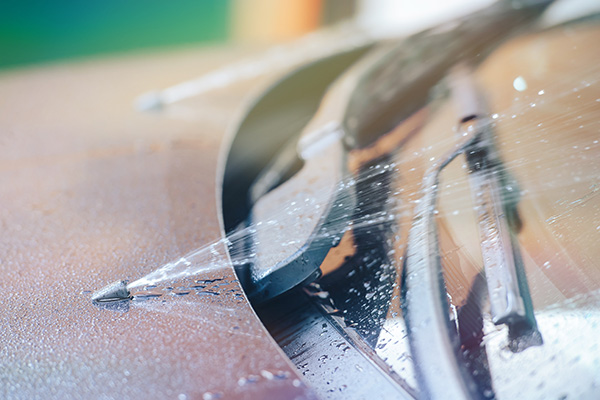
The wipers work, but pulling the washer switch gives you nothing. After a freezing night, the first suspect is frozen fluid somewhere between the reservoir and the nozzles. Keep pressing the switch, and a temporary freeze can become a damaged pump or an electrical problem, so give it a chance to thaw before trying again.
Frozen Washer Fluid Can Block More Than the Reservoir
The reservoir isn't the only place fluid stays after the washers are used. Small amounts remain in hoses, valves, and nozzles, where they can freeze even if the visible fluid in the tank seems liquid. A front washer that stops while the rear still works can have a problem in one branch of the plumbing. Some vehicles share a pump, while others use separate pumps.
Look at the temperature rating on the washer fluid you added. Water or a warm-weather mix can freeze well above the temperatures a winter blend is intended to handle. Adding winter fluid on top of a frozen tank doesn't instantly thaw the contents or clear an ice plug farther along a hose. The whole path needs to be able to flow again.
Thaw the Washers Without Damaging the Windshield
Moving the vehicle into a warm, sheltered space is the simplest way to let frozen fluid thaw. Keep the engine off in an enclosed garage. Don't pour boiling water over the windshield or use an open flame around the reservoir and hoses. Sudden heat can damage glass and plastic, and it creates a hazard around a vehicle.
Once everything has thawed, the remaining summer mix needs to be removed or replaced safely so the fluid in the tank has the protection the weather requires. Use the listed washer fluid, not engine coolant or household cleaning products. Follow any mixing instructions on the container. Ready-to-use winter fluid loses some freeze protection when diluted with water already in the reservoir.
Pump Noise Helps Narrow Down a Washer Fault
A pump that runs but produces no spray sends us toward a low fluid level, blockage, disconnected hose, or damaged pump. Silence suggests a different set of checks, including the fuse, wiring, switch command, and pump itself. We test for power and ground at the pump while the washers are commanded on, following the vehicle's wiring information. A silent pump with no power reaching it needs a different repair from a pump that receives power but doesn't operate.
A Split Washer Hose Can Empty the Tank
After thawing, watch for fluid reaching the ground or collecting under the hood when the washers are briefly operated. A split hose or loose connection can let the pump empty fluid somewhere other than the glass. Lines running to the rear window sometimes pass through trim or a liftgate hinge area, so a rear washer leak isn't always visible from outside.
We trace the hose and check its connectors, including any non-return valves. A damaged hose section can often be repaired separately, depending on the design and available fittings. If the reservoir has cracked, the fluid level may drop even with the washers unused. Checking where the fluid escapes avoids replacing a pump that was simply trying to move fluid through a leak.
Blocked Washer Nozzles Need Careful Cleaning
Debris or dried deposits can block a nozzle after the ice has gone. One weak jet with the others spraying well is a clue to check that nozzle and its supply line. A fan-style nozzle is easy to damage by forcing a pin into it. Heated nozzles, where fitted, have electrical checks of their own.
At the shop, we check flow before and after the suspect restriction. That helps separate a blocked nozzle from weak pump output or a restricted hose. The cleaning or replacement method follows the nozzle design. The final test checks the spray pattern across the windshield, not simply that some fluid comes out when the hood is open.
Keep Washer Problems From Returning in Cold Weather
Before another freeze, check these basics:
- Fluid rated for the lowest temperatures you expect
- Enough winter blend to replace the weaker mix
- Hoses and connections that stay dry during use
- Nozzles spraying across the glass correctly
- A reservoir cap that keeps dirt out
Test the washers while parked somewhere safe, with enough fluid in the tank. A functioning defroster and good wiper blades help too, but they won't replace washer fluid when road spray coats the glass. If you can't keep the windshield clear, stop somewhere safe and arrange help before carrying on through dirty or salty spray.
Get Windshield Washer Repair In Denver, CO, With South Denver Automotive
South Denver Automotive in Denver, CO, can check washers that stay blocked or leak after thawing. Mention any pump noise and which washers have stopped working.
Have the spray checked before the next drive leaves you unable to clear the glass.
Follow us on Facebook for Updates!