Most alignment problems don’t announce themselves with a big warning light. They show up as small annoyances you can easily blame on the road, the wind, or your tires. Then, a few months later, you’re looking at a tire that’s worn down on one edge and wondering how it happened so fast. A wheel alignment is one of those services that feels optional until it suddenly isn’t.
What A Wheel Alignment Really Changes
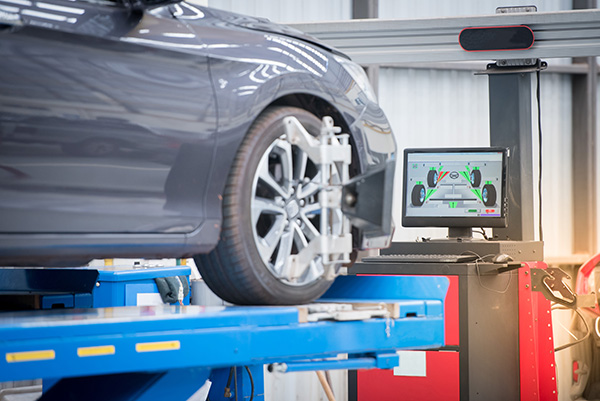
An alignment is about setting the angles of your wheels so the tires roll straight and meet the road evenly. The main angles are toe, camber, and caster. The toe is the big tire-wear one; even a small amount can scrub tread off every mile. Camber affects inside or outside edge wear, and caster influences straight-line stability and steering feel.
When the angles are right, the car tracks straight, the steering wheel sits centered, and the tires wear evenly. When they’re off, you may not notice it right away, but the tires do. That’s usually where the money goes.
The Subtle Signs Your Alignment Is Drifting
Alignment drift often starts as a feeling, not a dramatic symptom. If you catch it early, you can save a set of tires.
Here are a few clues drivers tend to notice first:
- The steering wheel is a little off-center when driving straight
- The car drifts left or right on a flat road
- You’re making more tiny steering corrections than you used to
- One tire edge looks more worn than the rest
- You feel a slight tug during braking or on uneven pavement
One thing we tell customers is to pay attention on a calm day on a straight road. If it still wanders, that’s a better test than judging it in heavy wind or on a crowned lane.
Symptom Timeline: From Mild Pull To Rapid Tire Wear
In the early stage, the car may simply feel slightly off. You might notice a gentle pull that comes and goes, or the steering wheel sits just a bit crooked. Many people live with this for a while because it doesn’t feel urgent.
Next comes the stage where tire wear starts showing up. The tread may feather, meaning it feels smooth in one direction and sharp in the other. You may also hear a low hum that wasn’t there before, especially as speed increases. At this point, even if you fix the alignment, the tires might already be on their way to getting noisy.
Later on, the handling can start to feel less predictable. The car may feel darty, like it reacts too quickly to small steering inputs. In wet conditions, uneven tires and poor alignment can also reduce grip, which is not where you want surprises.
What Usually Knocks Alignment Out
Big potholes and curb hits are the obvious ones, but alignment can drift without a memorable impact. Normal wear in steering and suspension parts can allow angles to shift over time. If a bushing is cracked or a tie rod has play, the wheel can move under braking and acceleration, and the alignment you set today may not hold.
Changes in ride height matter too. Sagging springs, heavy loads, or new suspension components can all alter the angles. We’ve also seen alignment drift show up right after tire replacement, not because the tires caused it, but because the new tread makes the issue easier to feel.
A Practical Schedule That Works For Most Drivers
There’s no single interval that fits everyone, but there are a few guidelines that are hard to argue with. A good baseline is to check alignment about once a year, or roughly every 12,000 miles, especially if you drive on mixed road surfaces. If you drive on rough streets often, it may be worth checking it more frequently.
You should also consider an alignment when you install new tires. It’s one of the simplest ways to protect the investment you just made. Another smart time is after any steering or suspension work, because even small changes can shift angles. If you hit something hard enough that you immediately notice the steering wheel is crooked afterward, that’s a strong sign to get it checked soon.
Cost Smart Planning
An alignment is only as good as the parts holding it. If something is loose, the numbers can look fine on the rack and still shift on the road. We see this when a vehicle keeps eating tires even though it “just got aligned.” The real culprit is often a worn bushing, ball joint, or tie rod that lets the wheel move.
A cost-smart approach starts with a quick inspection of steering and suspension play. If everything is tight, the alignment is usually straightforward, and the car should track better right away. If there’s looseness, fixing that first usually saves money because you avoid paying for an alignment twice. It also makes the car feel more stable, which is the whole point.
Get Wheel Alignment in Denver, CO with South Denver Automotive
If your steering wheel is off-center, your car is drifting, or your tires are wearing unevenly, it’s time to get the alignment checked before the wear gets expensive. We’ll inspect the steering and suspension, set the angles correctly, and help you keep your tires lasting the way they should.
Get wheel alignment in Denver, CO with South Denver Automotive, and we’ll help your vehicle drive straight, steady, and predictable again.