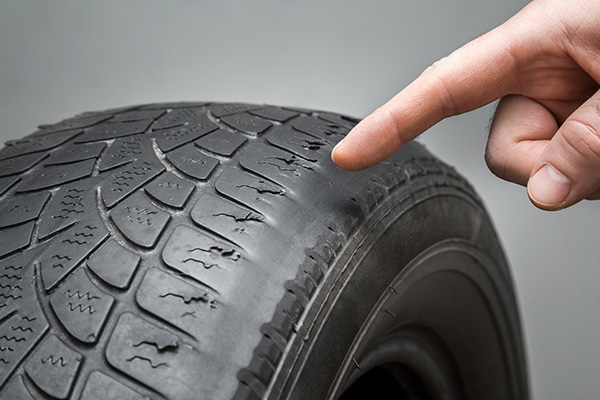
All-wheel drive gives drivers extra confidence in rain, snow, hills, and rough weather. It helps distribute power to multiple wheels, so the vehicle can maintain traction when conditions change. But AWD systems are also sensitive to tire condition in a way many drivers do not expect.
Uneven tire tread and mismatched tires can create stress inside the drivetrain. The vehicle may still drive normally at first, but the transfer case, center differential, couplers, axles, and related parts may be working harder than they should. Over time, that extra strain can turn a tire problem into an expensive AWD repair.
Why AWD Vehicles Care About Tire Size
AWD systems are designed to assume that all four tires are close to the same rolling diameter. When tires match, they rotate at predictable speeds. The drivetrain can deliver power where needed without constantly fighting wheel differences.
When one tire is smaller because it is worn more than the others, it has to rotate more times to travel the same distance. The difference may look small from the outside, but the drivetrain can feel it every mile. The AWD system may try to compensate for a wheel speed difference that is not actually caused by slipping.
That constant correction creates heat and stress. Parts that were meant to react to traction changes may stay loaded during normal driving.
Uneven Tread Changes Rolling Diameter
Tread depth affects the tire’s rolling diameter. A new tire is slightly taller than a worn tire. If one tire has deep tread and another is nearly worn out, they do not rotate at the same speed.
On a two-wheel-drive vehicle, that mismatch may still cause handling and braking concerns, but the drivetrain is usually less sensitive to all four tires matching. On an AWD vehicle, the difference can affect the system from front to rear and side to side.
This is why replacing only one tire on an AWD vehicle can be risky if the other three tires are already worn. The new tire may have more tread and a larger rolling diameter than the rest. That difference can create drivetrain bind and unnecessary wear.
Mismatched Tire Brands Can Also Cause Trouble
Tread depth is not the only concern. Tires from different brands or models may have different constructions, tread designs, rubber compounds, and actual measured sizes, even if the sidewall sizes look the same.
For example, two tires may both say the same size on the sidewall, but one may roll slightly taller or wider in real use. One may also flex differently under load. On an AWD vehicle, those differences can matter.
Mixing touring tires with performance tires, winter tires with all-season tires, or different tread patterns can also affect traction. If one tire grips differently from the others, the AWD system may react more often than it should. That can make the vehicle feel less predictable and place extra demand on drivetrain components.
How Tire Problems Stress The AWD System
An AWD drivetrain is built to handle some wheel speed difference during turns and traction changes. It is not meant to handle a constant tire mismatch during every mile of normal driving.
Uneven tires can contribute to:
- Transfer case strain
- Center differential wear
- Coupler overheating
- Drivetrain binding
- Axle stress
- Warning lights
- Vibration or shuddering
- Premature tire wear
- Poor traction balance
These symptoms may not appear immediately. The vehicle can drive quietly while internal parts absorb the stress. By the time noise, binding, or warning lights appear, the repair may already be larger than a tire replacement.
Why Tire Rotation Matters More On AWD
Tire rotation helps keep tread wear more even across all four tires. Since AWD vehicles depend on matched tire circumference, rotation is more than a tire-life service. It helps protect the drivetrain too.
Front and rear tires can wear at different rates based on steering, braking, vehicle weight, suspension condition, and driving habits. If tires are never rotated, two tires may become much more worn than the others. That tread difference can create the mismatch AWD systems dislike.
Regular maintenance should include tire rotation, tread depth checks, air pressure checks, and a look at wear patterns. If the tread is wearing unevenly, the cause should be found before it damages both the tires and the drivetrain.
Alignment And Suspension Problems Make It Worse
Uneven tread often has a cause. Poor wheel alignment, worn shocks or struts, loose steering parts, weak bushings, incorrect tire pressure, or bent wheels can all cause uneven tire wear. If those problems are ignored, new tires can start wearing the same way.
An AWD vehicle with uneven wear should receive more than a quick tire glance. The tires, wheels, alignment, steering, and suspension should be checked together. That inspection can help prevent the same tread difference from returning.
If tire wear is caught early, rotation or alignment correction may help. If the tread difference is already too large, replacement may be the only safe and practical answer.
When One Damaged Tire Becomes Four Tires
One of the frustrating parts of AWD ownership is that one damaged tire may lead to replacing more than one tire. If the other tires are sufficiently worn, installing a new tire can create an excessive tread difference.
Some tire shops can shave a new tire to match the tread depth of the remaining tires, but that option depends on tire type, availability, and whether the other tires are still in good condition. If the set is already worn, old, mismatched, or uneven, replacing all four tires may be the better choice.
It may feel expensive at the moment, but it can be cheaper than damaging an AWD transfer case or differential.
Get AWD Tire Service In Denver, CO, With South Denver Automotive
If your AWD vehicle has uneven tread, mismatched tires, vibration, drivetrain noise, or tire wear that does not look normal, South Denver Automotive in Denver, CO, can check the tires, alignment, suspension, and AWD-related concerns.
For tire service that helps protect your AWD drivetrain, contact us to schedule an appointment.